
Bad times, hard times, this is what people keep saying; but let us live well, and times shall be good. We are the times: Such as we are, such are the times.
Saint Augustine of Hippo
A few years ago, I started following a woman on Instagram who was bold about sharing her faith as a converted atheist. I was moved by her testimony as were 250,000 or so other people. Today, she came up on my feed talking about the demonic spiritual forces of the Super Bowl. Many of her points made sense for someone of an evangelical background. However, her third point was about the “traumatizing effects” of male cheerleaders on her sons. Many followers politely asked her to elaborate on that point. She declined to answer or responded with snarky comments. When I and another women (kindly but sternly) asked her why she was so dodgy all of the sudden, she upped the snark factor. When I encouraged the other women for commenting in a Christ-like manner amidst the attitude and told her I was praying for her, the original poster called me Satan (as in… Get Thee Behind Me Satan) and told me I was misleading her followers.
My life, exemplified by this latest interaction, has gotten increasingly unbelievable.
As we’ve discussed, asking questions of religious leaders, or questioning their character is increasingly becoming taboo in Christian circles. Despite this, I still think dissent, disagreement, and questions matter. I think Christian conversations are holy work. While I’ve known dissent is controversial, my interaction with this Christian Influencer revealed a truth I’ve been learning the last several months: basic Biblical tenants are becoming controversial in many so-called “Christian” spaces. Caring for the poor, loving your enemy, rejoicing in persecution, and (as of today) praying, are all central tenants of the Christian faith I’ve been told over the last few months are demonic, stupid, woke, or some variation therein.
The American Church is no longer on its last leg. It’s in a full fall crisis. When the act of prayer becomes demonic and Christ’s second most essential commandment to love thy neighbor is described as “toxic” or “woke,” we’ve lost the plot entirely.
The American Church needs missionaries. If you are reading this from outside the United States, please prayerfully consider coming Stateside and helping us right our wayward ship. We need voices of truth now more than ever. If you’re already in the US, consider how you might witness to the Church at this critical moment. I argue, as I have for the last several years, that one effective way to do this is to minister on social media, a term I’ve come to call digital ministry.
Like dissention (and… prayer?), conceptualizing social media as a mission field has been deeply controversial, particularly for pastors. Social media can have a bad reputation as a cesspool for debate and division. When used incorrectly, just like any other mode of communication, social media can absolutely be used as a weapon. Around the holidays, we joke culturally about the cutthroat nature of the holiday dinner table, as relatives and loved ones spar over politics. Social media isn’t inherently divisive; we as people are divisive. Just as we can have thoughtful, nuanced, productive, and respectful conversations in-person, around the holiday table, I believe we are also capable of having thoughtful, nuanced, and productive conversations online. In fact, I don’t just believe this, I’ve witnessed it, going on a decade.
In this week’s Not Done Yet post, I want to provide a quick and dirty response to some common critiques of digital ministry.
Social Media Isn’t Going Anyway
The first reason I think digital ministry is important is because it isn’t going anywhere. More people are using more platforms more often than previously. If we want to share the Good News, we’ve got to get where the people are. Increasingly, that’s online. Churches have been bolstering their social media presences and offering streamed services over Facebook, YouTube, or other hosting sites, yet we as a Body seem hesitant to engage one-on-one in online spaces. If your pastor can preach on social media, I personally believe you can too.
Non-Believers Want to Hear From Us on Social Media
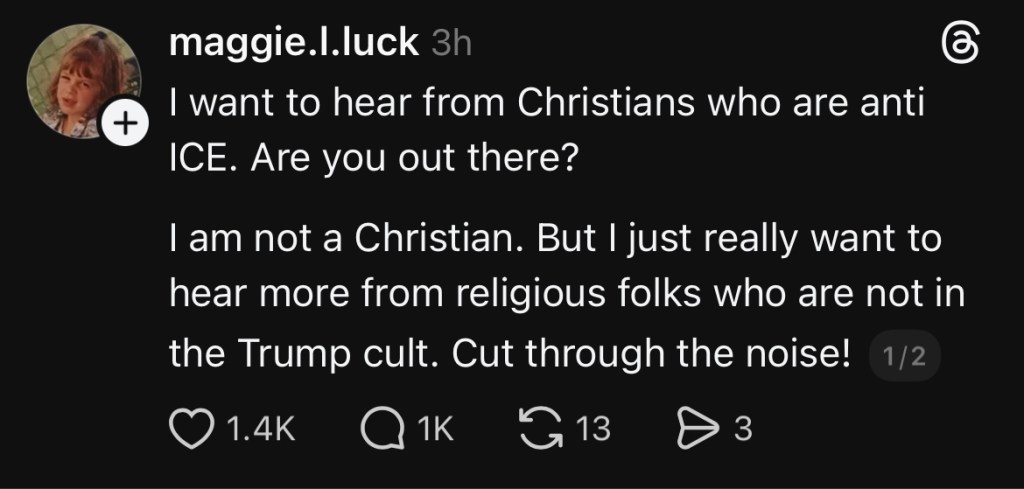
This is one of many non-believers asking to hear Christian perspectives on ongoing issues. If you’re not Anti-ICE because you’re a Christian, non-believers want to hear that. If you’re anti-ICE because you’re a Christian, non-believers want to hear that. If you’re somewhere in the middle, non-believers want to hear that too. Although, sure, it would be ideal, if everyone came to a Sunday service or a Wednesday night small group, we don’t need to actively recruit people to come to our space, when they’re already inviting us into theirs. Take them up on their invitation. Share the Gospel where people are wanting and waiting to hear it.
Poorly Behaved Christians Are Already Posting
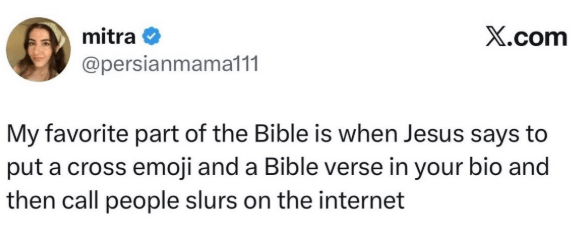
As a digital missionary, let me tell you loud and clear: the people referenced in this screenshot are not rare – they are everywhere. And they likely attend worship at someone’s church. Christians are actively giving Christ a bad name on social media. As a result, they are weakening your witness and effectiveness as an evangelizer, even if you only evangelize offline. Do we as the Church really want the only people posting about Christ on the internet to be people calling other people slurs or demonizing prayer? I don’t! I want people to see that someone rooted in Christ can be calm, collected, merciful, and just online and in-person. I want people to know how Christians disagree. I want every single person on earth to know and to experience the love and justice and mercy of Christ. I’m going to go where the false teachers are and do my best (inevitably failing more than once) to be a sheep amidst the wolves.
Tips to Getting Started as a Digital Missionary
- Stay prayed up – The world is full of demons, and these demons have internet access. Stay prayed up to stand firm against their tactics, spot their lies immediately, and respond in the Spirit rather than the flesh.
- Stay repentant – Bad news: you’re human. You’re going to mess up, on the digital mission field and in your life. Maintain a humble spirit, be amenable to feedback, and continually repent for your on- and offline life.
- Test voices – There are many false teachers preaching in this country. Read scripture, pray, and ask the Holy Spirit to test the voices you come across and the feedback you receive. The Spirit will answer.
- If you see something, say something – If you’re scrolling and notice a friend from church say something horribly demeaning about an image-bearer of God, it is your responsibility to say something. It can be in a private message, in a text, or to their face on Sunday. But let them know, kindly but firmly, that their social media represents Christ, and you want to see His name represented correctly. As you get braver and better, consider engaging with the commenter on your favorite Christian radio station’s page or post a comment of your own that engages with the post in a Christ-like manner, providing an example for others to follow.
- Encourage doubters and grieve with sufferers – Digital ministry isn’t always about calling people out, oftentimes, it’s about coming alongside someone in pain. A few days ago, I talked to a woman who was struggling with her faith amidst the evil and darkness of the world. She didn’t reach out to her pastor or her friend, she commented on a photo on Instagram. When you see someone doubting or suffering, even if they’re online, be the Body of Christ that provides a safe space for them to wrestle, mourn, and pray.
- Stay calm and ask questions – Many people are used to debates on social media. Change the conversation by inviting people into a discussion, not a debate. When they egg you on to debate them, keep asking questions and stating your intention to hear their perspective, not change their mind. The Devil likes us riled up, but God invites us to bear the good fruits of patience and gentleness. We don’t disagree or comment like the world. We disagree and comment like co-heirs with Christ.
- Know when to walk away – After being referred to as Satan this afternoon, I prayed to ask God for direction. God told me Proverbs 5:8 and I listened. Like any missionary, you can’t save everyone. Some people want to be slaves to sin and fear. Add them to your prayer wall and pray for them unceasingly. Be humble enough to let the Holy Spirit guide the next missionary to them.
I believe, help my unbelief, that Christians can share Christ in any circumstance, on any platform, at any time. I believe (seriously, help my unbelief) that God can redeem any person and any situation. And, I believe, help my unbelief, that God can save the Church. All will be well and all shall be well and all will be well.
Like this post? Please share it with a friend! Hate this post? Let us know. Also, feel free to let us know what questions you have on digital ministry.
Bryce Van Vleet is the #1 selling author of Tired Pages and Before We All Die Let’s Have One Last Chat by the Fireside. He sells poetry art here, published a collection of poems titled Weak Eyes, and masquerades as the spoken word artist Liihey. You can support him by clicking through blog posts or donating (scroll to the bottom of the page).
 Living Beyond
Leave a comment